Main Courses
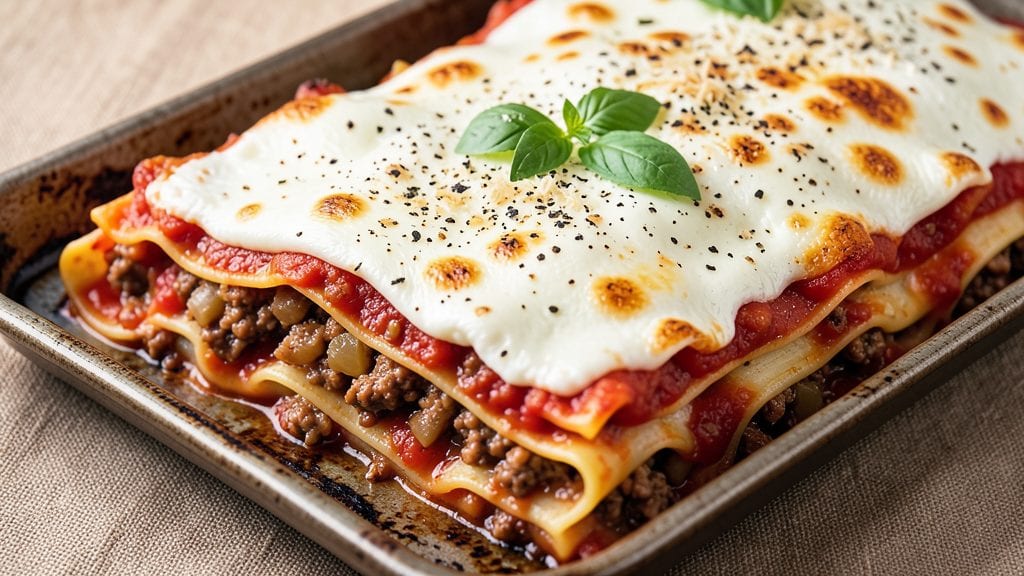
This cookie sheet lasagna recipe transforms traditional layered pasta into a foolproof one-pan wonder that delivers restaurant-quality results with minimal effort. The secret lies in using a cookie sheet for even heat distribution, creating crispy edges and perfectly melted cheese without the need for a heavy baking dish.
I developed this method after years of struggling with soggy lasagna—now every layer stays intact while the sauce achieves that signature silky texture.
The beauty of this approach is its simplicity: no pre-boiling noodles required, just 25 minutes at 375°F for a dish that feels indulgent yet effortless. The key technique involves layering ingredients in thin, even sheets that cook uniformly, eliminating the risk of undercooked centers or overbrowned tops.
This method also makes it perfect for meal prep, as the lasagna reheats beautifully while maintaining its structure.
What you'll achieve is a lasagna with golden, crispy edges that contrast perfectly with tender noodles and a rich, bubbling cheese topping. The sauce remains vibrant and flavorful, not watery or separated, thanks to careful ingredient ratios and the cookie sheet's even heat.
Each bite delivers the perfect balance of textures—creamy ricotta, savory meat sauce, and crispy pasta—all in one satisfying package.
Serve with a simple side salad and garlic bread for the complete meal experience, or enjoy it as-is for a satisfying weeknight dinner. The best part? This recipe scales effortlessly for parties or leftovers, making it the ultimate one-pan solution for busy schedules. Let's get baking!
Ingredients for cookie sheet lasagna
Twelve essential ingredients transform into crispy-edged lasagna magic on a single sheet.
| Ingredient | Amount | Notes |
|---|---|---|
| No-Boil Lasagna Noodles 🍝 | 12 pieces | Uncooked, oven-ready sheets |
| Ricotta Cheese 🧀 | 1 ½ cups | Full-fat for creaminess |
| Ground Beef 🥩 | 1 ½ lb | 80/20 fat ratio preferred |
| Marinara Sauce 🍅 | 2 ½ cups | High-quality, chunky preferred |
| Mozzarella Cheese 🧀 | 2 cups | Shredded, part-skim works |
| Parmesan Cheese 🧀 | ½ cup | Freshly grated, block preferred |
| Yellow Onion 🧅 | 1 whole | Medium size, finely chopped |
| Garlic Cloves 🧄 | 4 cloves | Fresh, minced for sauce |
| Extra-Virgin Olive Oil 🫒 | 2 tbsp | For browning meat |
| Italian Seasoning 🌿 | 1 tbsp | Diamond Crystal preferred |
| Salt 🧂 | 1 ½ tsp | Diamond Crystal kosher |
| Black Pepper 🌶️ | ½ tsp | Freshly cracked |
| Eggs 🥚 | 2 whole | For binding ricotta mix |
The lasagna noodles are the game-changer here—no-boil sheets cut prep time dramatically. Barilla or De Cecco are my go-tos, but any reputable brand works. For the beef, 80/20 fat ratio is non-negotiable—it keeps the sauce rich and prevents drying. Most grocery stores carry pre-ground chuck, but if you're buying whole, look for bright red color with good marbling. The ricotta should be full-fat—low-fat versions get gummy when baked. I always buy mine from Whole Foods or the deli counter at Trader Joe's for the freshest texture. The mozzarella? Shred it yourself from a block—pre-shredded gets clumpy and watery.
No Italian seasoning? Combine dried basil, oregano, and thyme at a 1:1:1 ratio. Short on ricotta? Cottage cheese blended smooth works in a pinch (though texture differs). The marinara can be jarred—Rao's or Muir Glen are my pantry staples—but homemade is worth it if you've got 20 minutes. For the onions, yellow or red both work, but yellow has more sweetness. Garlic burns fast—sauté it in olive oil first until fragrant before adding to the beef. The no-boil noodles are a must—they absorb sauce perfectly without turning mushy, but if you're using regular lasagna noodles, undercook them by 1 minute before layering.
This lasagna reheats beautifully—350°F for 15 minutes with foil over the top. Keeps 4-5 days in the fridge, freezes for 3 months (though texture changes slightly). I always bake it on a heavy-duty cookie sheet—Half Price Tools makes a great one that handles the heat. For meal prep, assemble it ahead and refrigerate up to 24 hours before baking. The cheese topping gets extra crispy if you broil it 2 minutes at the end—just watch it like a hawk!
Why You'll Love This Recipe
- No Boil, No Stress: I swear by those no-boil noodles—just spread, layer, and bake. No standing over a pot, no waiting for water to boil, no sticky messes. My kids even help assemble it now.
- Creamy-Meaty Magic: That ricotta and beef combo? It’s like lasagna’s secret handshake—rich, hearty, and impossible to resist. The mozzarella on top gets that perfect golden crust while keeping the middle gooey.
- Weeknight to Party Fix: Same dish, different vibes. Serve it with a side salad for a casual Tuesday or add a sprinkle of parmesan for a dinner party. Honestly, it’s my go-to when I don’t want to overthink dinner.
- Leftovers That Don’t Suck: Most lasagnas turn into sad, dry bricks the next day. Not this one. The no-boil noodles stay tender, and the sauce holds up—so I make a double batch and freeze half. (Yes, even on a Tuesday night.)
Step-by-step instructions for cookie sheet lasagna
This one-pan bake transforms traditional lasagna into a foolproof, restaurant-quality dish with minimal effort.
Prepare the Meat Sauce Foundation
Heat the 2 tablespoons extra-virgin olive oil in a large skillet over medium-high heat. Add the 1 whole yellow onion, finely chopped, and cook for 5 minutes until softened and translucent. Add the 4 cloves garlic, minced, and cook for another 30 seconds until fragrant—this prevents bitter flavors from developing.
Push the onions and garlic to one side of the pan and add the 1.5 pounds ground beef, breaking it apart with a wooden spoon. Season immediately with 1.5 teaspoons salt, 0.5 teaspoon black pepper, and 1 tablespoon Italian seasoning. Cook for 6-8 minutes until the beef is deep brown and mostly cooked through. Drain excess fat if needed, leaving about 1 tablespoon for flavor.
Return the onion-garlic mixture to the pan and stir to combine. Pour in the 2.5 cups marinara sauce and simmer for 10 minutes until slightly thickened. Remove from heat and let cool slightly—this prevents the noodles from getting soggy when assembling.
Create the Ricotta Cheese Mixture
In a medium bowl, combine the 1.5 cups ricotta cheese, 2 whole eggs, 0.5 cup freshly grated parmesan cheese, 0.5 teaspoon black pepper, and 0.5 teaspoon salt. Mix gently with a fork until just combined—overmixing incorporates air, which can make the filling too light. The mixture should be smooth but still slightly lumpy.
I always use full-fat ricotta here for that creamy, velvety texture. If your ricotta is particularly wet, drain it through a fine-mesh sieve for 5 minutes before mixing to avoid a watery lasagna. This step is where the magic happens—every bite should deliver that rich, cheesy pull you crave.
Assemble the Lasagna Layers
Preheat your oven to 375°F. Grease a 9x13-inch cookie sheet lightly with olive oil to prevent sticking. Spread ½ cup marinara sauce evenly over the bottom of the pan—this prevents burning and adds moisture to the first layer.
Layer the 12 pieces no-boil lasagna noodles horizontally, slightly overlapping if needed to cover the pan completely. Spread ⅓ of the ricotta mixture evenly over the noodles, then ⅓ of the meat sauce. Sprinkle ⅔ cup mozzarella cheese over this layer. Repeat with another layer of noodles, remaining ricotta, meat sauce, and ⅔ cup mozzarella. Top with a final layer of noodles, remaining meat sauce, and the last ⅔ cup mozzarella. Finish with a sprinkle of 0.25 cup parmesan cheese for extra depth of flavor.
Bake to Golden Perfection
Cover the cookie sheet tightly with heavy-duty aluminum foil and bake for 25 minutes. Remove the foil and bake for another 10-15 minutes until the top is deep golden brown and bubbly. The edges should be slightly crispy—this indicates the cheese has melted and formed that irresistible crust.
Let the lasagna rest for 10 minutes before slicing. This resting period allows the layers to set and prevents a runny mess. The internal temperature should reach 165°F when checked in the thickest layer. Serve with a side salad or garlic bread for the ultimate comfort meal experience!
Pro Tips For Making Cookie Sheet Lasagna
- Preheat Pan Properly: Slap that cookie sheet in the oven for 10 minutes at 375°F before assembling—yes, even if you’re using no-boil noodles. I learned this the hard way when my first batch stuck like glue and came out gummy. A hot pan means better browning and easier cleanup later.
- Drain Ricotta Well: Skip the watery ricotta mess by draining it in a fine-mesh strainer for 15 minutes after mixing with eggs and seasoning. Trust me, you don’t want a soggy lasagna just because you rushed this step. (And no, blotting with paper towels doesn’t cut it.)
- Layer Sauce Sparse: Don’t drown the noodles—use just enough marinara to coat the bottom of the pan before the first layer, then add a thin layer between each. Too much sauce makes the noodles mushy, and nobody wants that. Think "glue," not "pool."
- Cover Tightly First: Press that foil directly onto the top of the cheese after the first 20 minutes—no gaps, no air pockets. I used to leave space for "steam," but it just made the top dry out. Seal it like a burrito, then uncover for the final 10 minutes to get that golden crust.
Essential equipment for this dish
Cookie Sheet Essentials
The star of this recipe is a heavy-duty half-sheet pan—I swear by the Half Price Tools 18-inch x 13-inch model because it handles the heat without warping. Look for thick-gauge aluminum (at least 0.016-inch thick) to prevent hot spots.
If you don’t have one, a 9x13-inch glass baking dish works in a pinch, but edges may not get as crispy.
Non-Negotiable Tools
A lasagna pan spatula (like the OXO Good Grips) is your best friend for assembling layers without tearing the noodles. For the ricotta mixture, a medium bowl with nonstick coating prevents sticking when scraping out the last bits.
I also recommend a fine-mesh sieve for draining wet ricotta—Egg Crate brand works perfectly for this.
Cheese Prep Gear
Shredding your own mozzarella is a game-changer, and a box grater (like the Microplane) gives you the perfect texture. For parmesan, a handheld cheese grater (such as OXO’s) ensures you get those fine, flavorful shavings. Store-bought pre-shredded cheese? Skip it—it contains anti-caking agents that make the lasagna gummy.
Temperature Control
An instant-read thermometer (I use ThermoWorks Thermapen ONE) is critical for checking the 165°F internal temperature in the thickest layer. The cookie sheet’s even heat distribution means you won’t need to rotate the pan mid-bake, but a wire cooling rack helps prevent soggy bottoms if you’re reheating leftovers.
Budget-Friendly Swaps
No fancy tools? A standard baking sheet (like Wilton’s) works fine—just grease it well with extra-virgin olive oil to prevent sticking. For cheese, block mozzarella from the deli counter at Trader Joe’s or Whole Foods is cheaper than pre-shredded and far superior.
A wooden spoon for mixing the ricotta mixture is just as effective as a silicone spatula.
Pro Upgrades
For next-level crispiness, invest in a lasagna stone (like Lodge’s) that fits your cookie sheet—it creates a crispy, crackly crust on the bottom layer.
A digital kitchen scale (such as OXO’s) ensures precise measurements for the ricotta mixture, and a laser thermometer (like Meater) lets you monitor the oven’s heat without opening the door and losing temperature.
Nutrition facts
Frequently asked questions
Why use a cookie sheet instead of a traditional lasagna pan?
The cookie sheet's even heat distribution creates crispy edges and prevents soggy centers while eliminating the need for a heavy baking dish. It also bakes faster (25-35 minutes total) and makes slicing easier without worrying about a deep pan's weight. The thin metal ensures perfect browning on all sides!
Can I make this lasagna without no-boil noodles?
Yes! Use regular lasagna noodles and undercook them by 1 minute before layering. Spread an extra ¼ cup marinara sauce on the bottom to prevent sticking. The cookie sheet's heat will finish cooking them perfectly while keeping the layers intact.
How do I get extra crispy edges on my lasagna?
Bake uncovered for the last 10-15 minutes at 375°F until golden brown. For next-level crispiness, broil for 2 minutes at the very end—watch it closely to avoid burning! A lasagna stone on the cookie sheet also creates a crackly bottom layer.
Can I make this ahead of time?
Assemble the lasagna up to 24 hours ahead and refrigerate uncovered. Bake straight from the fridge (add 5-10 minutes to cooking time). For freezing, bake completely, cool, wrap tightly in foil, and freeze for up to 3 months. Reheat at 350°F for 15 minutes with foil over the top.
What if my lasagna looks dry after baking?
This usually means the sauce needed more moisture. Next time, add ¼ cup water or broth to the meat sauce before assembling. For existing dry lasagna, cover with foil and bake at 350°F for 10 minutes**—the residual heat will redistribute moisture. Avoid adding liquid after baking as it can make the noodles mushy.