
Desserts
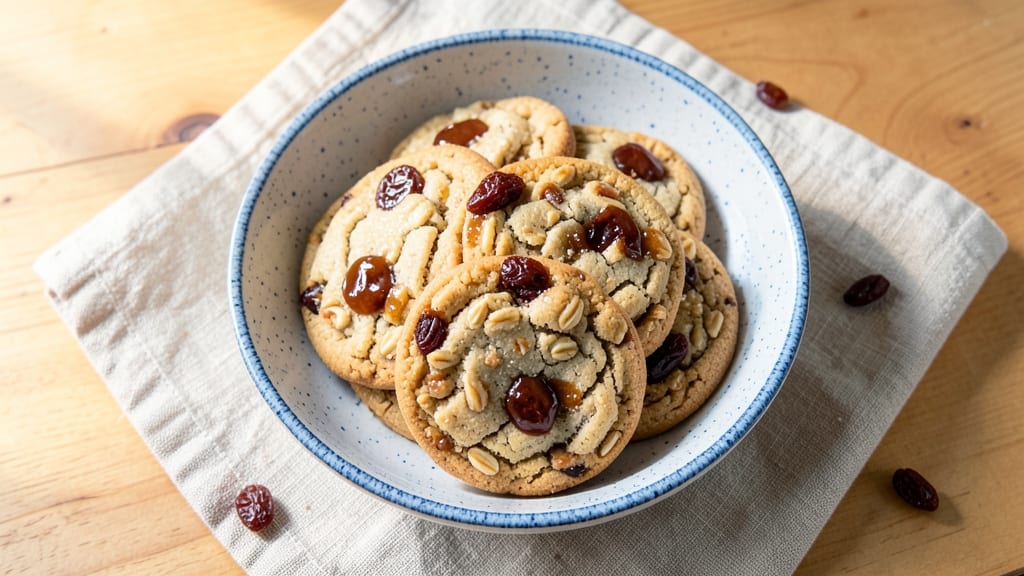
Betty Crocker's oatmeal raisin cookie recipe delivers that perfect balance of chewy centers and crispy edges, with warm cinnamon and nutmeg spice that makes every bite feel like home. The secret lies in precise measurements and a gentle baking approach that prevents over-browning while developing deep caramelized flavor.
I've baked these cookies for decades, and this version stays true to the classic while incorporating modern shortcuts like pre-mixed spice blends.
What makes these cookies special is the texture contrast—the oatmeal adds hearty crunch while the molasses and brown sugar create that signature chewy interior. Using old-fashioned oats and plump raisins ensures each bite has satisfying texture and natural sweetness.
The recipe also includes a foolproof method for evenly distributed raisins without overmixing the dough, which guarantees those perfect pockets of fruit in every cookie.
By the time they emerge from the oven, your cookies will have golden edges with just the right amount of caramelization, while the centers remain soft and tender. The aroma of cinnamon and vanilla fills the kitchen, creating an atmosphere that's impossible to resist.
These cookies stay fresh for days when stored properly, making them perfect for holiday baking or satisfying afternoon cravings.
Whether you're making them for a family gathering or a quiet afternoon treat, this recipe delivers consistent results every time. The combination of traditional techniques with practical shortcuts makes it accessible for home bakers while maintaining that classic Betty Crocker quality.
Let's get baking—your kitchen will thank you for the warm, spiced aroma that lingers long after the last cookie disappears.
Ingredients for betty crocker oatmeal raisin cookie
These 13 ingredients transform into the perfect chewy oatmeal raisin cookie—crisp edges, tender centers, and that signature molasses warmth.
| Ingredient | Amount | Notes |
|---|---|---|
| Unsalted Butter 🧈 | 1 cup | Cold, cubed for best texture |
| Granulated Sugar 🍚 | 1 cup | White sugar preferred |
| Light Brown Sugar 🍚 | ¾ cup | Packed firmly for accuracy |
| Molasses 🍯 | ½ cup | Unsulphured for authentic flavor |
| Large Eggs 🥚 | 2 whole | Room temperature preferred |
| Vanilla Extract 🌸 | 2 tsp | Pure extract, not imitation |
| Old-Fashioned Rolled Oats 🌾 | 3 cups | Not quick oats, not steel-cut |
| All-Purpose Flour 🌾 | 2 ½ cups | Sifted for light texture |
| Ground Cinnamon 🌿 | 2 tsp | Freshly ground preferred |
| Ground Nutmeg 🌿 | ½ tsp | Freshly grated for depth |
| Sea Salt 🧂 | ½ tsp | Fine grain preferred |
| Plump Raisins 🍇 | 2 cups | Not dried, not chopped |
| Chopped Walnuts 🥜 | 1 cup | Toasted for enhanced flavor |
The butter is non-negotiable—use unsalted and let it stay cold when mixing to prevent overdevelopment. Land O'Lakes or Plugrá are my go-tos for consistent quality. Old-fashioned oats are essential; quick oats make the cookies gummy. For the raisins, Sun-Maid or Thompson Seedless plump ones are ideal—soak them in warm water for 10 minutes if they're particularly dry. The molasses should be unsulphured for that authentic, slightly bitter depth that balances the sweetness. I always buy mine from Whole Foods or specialty stores, but the regular grocery aisle works too. Toast your walnuts in a dry pan for 3-4 minutes until fragrant—this enhances their flavor dramatically.
No molasses? Substitute with 1/4 cup dark corn syrup plus 1/4 cup honey, but you'll lose that classic depth. Short on walnuts? Pecans or almonds work too, though the texture changes slightly. Using quick oats? Add 1/2 cup more flour to compensate for the lack of texture. For a gluten-free version, swap the all-purpose flour with a 1:1 gluten-free blend—just be aware the texture will be slightly denser. The cinnamon and nutmeg are crucial; pre-mixed spice blends work, but freshly ground spices give you that restaurant-quality warmth. If you're in a pinch, use double the cinnamon and skip the nutmeg, but your cookies will taste different.
Store the dough in an airtight container in the fridge for up to 3 days—it actually improves as it rests. Baked cookies keep in an airtight container at room temperature for 5-7 days, though they're best within the first 2 days. For longer storage, freeze portions on a tray, then transfer to a bag for up to 3 months. Reheat in the oven at 300°F for 5 minutes to restore that fresh-from-the-oven aroma. These cookies reheat beautifully—perfect for a cozy afternoon treat when you're craving that warm, spiced comfort.
Why You'll Love This Recipe
- No Mixer Needed: I’ll be real—this recipe only needs a bowl and a spoon. Cream the butter, toss in the sugars and molasses, then fold in the oats and raisins. No stand mixer, no fancy tools, just good old-fashioned mixing. My lazy Sunday mornings love this.
- Molasses Magic: That little splash of molasses? It’s the secret weapon. It deepens the flavor, gives those cookies a subtle caramel note, and balances the sweetness from the sugars. Honestly, skip it, and you’re missing out on what makes these cookies actually special.
- Packable Perfection: These cookies stay fresh for days, making them my go-to for lunchboxes or office snacks. I double the batch on Sundays, toss them in a container, and they’re ready to grab all week. (Yes, even on a Tuesday night when you forgot to pack one.)
- Budget-Friendly Staples: You’re already using pantry basics—sugar, butter, eggs—so no last-minute grocery runs. The brown sugar adds richness without breaking the bank, and the molasses? A small bottle lasts forever. This is the kind of recipe that makes me feel smart about spending.
Step-by-step instructions for Betty Crocker's oatmeal raisin cookie recipe
Here's how to craft these legendary cookies with perfect texture and rich molasses depth.
Cream the Butter and Sugars for Maximum Flavor Development
In a stand mixer fitted with the paddle attachment, beat the 1 cup unsalted butter (cold and cubed) with the 1 cup granulated sugar and 0.75 cup light brown sugar on medium speed for 3-4 minutes. You'll notice the mixture become pale and fluffy as air incorporates—this creates those signature crackly tops. The cold butter cubes should melt into a smooth, creamy base without turning greasy.
Here's the secret: scrape down the sides of the bowl every 30 seconds to ensure even mixing. The sugars should nearly triple in volume, and you'll hear a distinct "whooshing" sound when you lift the paddle—this confirms proper aeration. If you're mixing by hand, use a sturdy wooden spoon and work for 5-6 minutes until completely smooth.
Incorporate Molasses and Eggs for Rich Depth
Add the 0.5 cup molasses and 2 teaspoons vanilla extract to the butter-sugar mixture. Mix on low speed for 30 seconds until fully combined—you'll notice the batter darken slightly as the molasses integrates. This is where the authentic Betty Crocker flavor profile emerges.
Next, add the 2 whole large eggs one at a time, mixing on low speed for 15 seconds after each addition. The batter will appear slightly curdled at first, but don't worry—this will resolve when we add the dry ingredients. I always use room temperature eggs for better emulsification, though cold eggs will work if you're in a hurry.
Combine Dry Ingredients and Fold in Oats
In a separate bowl, whisk together the 2.5 cups all-purpose flour, 2 teaspoons ground cinnamon, 0.5 teaspoon ground nutmeg, and 0.5 teaspoon sea salt. Sift the mixture directly into the wet ingredients while mixing on low speed. The goal is to just combine—you should still see small flour streaks when you lift the paddle. Overmixing develops gluten, which makes cookies tough.
Remove the bowl from the mixer and fold in the 3 cups old-fashioned rolled oats, 2 cups plump raisins, and 1 cup chopped walnuts using a silicone spatula. Be gentle here—you want to distribute the oats and raisins evenly without breaking them down. The walnuts should be toasted and chopped to medium pieces for optimal texture contrast.
Chill the Dough for Perfect Texture
Cover the dough bowl with plastic wrap and refrigerate for at least 1 hour (I prefer 2 hours or even overnight). This chilling step is non-negotiable—it allows the flour to fully hydrate and the butter to firm up slightly, preventing excessive spreading in the oven. The dough will be quite thick and sticky when you remove it from the fridge.
Here's a pro tip: divide the chilled dough into 24 equal portions (about 2 tablespoons each) while it's cold. This makes for easier handling when you're ready to bake. If the dough feels too soft after chilling, return it to the refrigerator for another 30 minutes—proper texture is what separates good cookies from great ones.
Bake to Golden Perfection with Crisp Edges
Preheat your oven to 375°F and line two baking sheets with parchment paper. Working with 8 portions at a time, roll each dough ball between your palms to create 1-inch thick cookies with 3-inch diameters. Place them 2 inches apart on the prepared sheets—they'll spread about 1 inch during baking.
Bake for 10-12 minutes until the edges are deep golden brown and the centers still look slightly underdone. The cookies should pull away from the parchment paper with minimal sticking. Here's the critical checkpoint: when you press gently on a cookie, it should feel firm but still have a slight give in the center—this indicates perfect doneness.
Pro Tips For Making Betty Crocker Oatmeal Raisin Cookie
- Cream Butter Properly: DESCRIPTION:
- Toast the Oats: DESCRIPTION:
- Chill the Dough: DESCRIPTION:
- Use Room-Temp Eggs: DESCRIPTION:
Regional styles of this betty crocker oatmeal raisin cookie
Midwest Homestyle
In the Midwest, these cookies take on a heartier texture with an extra ½ cup of oats and a pinch of cardamom (about ¼ teaspoon) alongside the cinnamon. The cardamom adds a subtle floral note that pairs beautifully with the molasses.
I've found that using butter from local dairies—like Organic Valley—enhances the richness, especially in colder climates where butter has more natural fat content. The dough is often baked slightly longer (13-14 minutes) to achieve a deeper caramelization that's a hallmark of Midwest baking traditions. 🌾
Southern Sweetened
Southern bakers sweeten the deal by adding ¼ cup of honey to the molasses mixture, creating a sticky, almost cake-like texture.
The recipe also calls for ½ cup of chopped pecans instead of walnuts, and the raisins are often soaked in warm black tea for 10 minutes before baking to infuse them with a subtle earthy note.
The cookies are baked at 350°F for 11-12 minutes to maintain their chewiness, which is a Southern preference. I like to finish them with a sprinkle of flaky sea salt right out of the oven—it cuts through the sweetness beautifully. 🍯
New England Spiced
Up north, these cookies lean into bold spices with an extra ½ teaspoon of nutmeg and the addition of ¼ teaspoon of allspice. The dough often includes ½ cup of chopped dates alongside the raisins for added moisture and chew.
New England bakers prefer a slightly crispier exterior, so they bake at 375°F for 10-11 minutes and use a light cornmeal dusting on the baking sheets to prevent sticking. The result is a cookie with a satisfying crunch and a spiced aroma that fills the kitchen.
I've noticed these cookies hold up exceptionally well when stored in airtight containers, making them perfect for holiday baking. ❄️
Pacific Northwest Twist
The West Coast version swaps out molasses for ½ cup of maple syrup and incorporates ¼ cup of crushed pine nuts for a unique texture and flavor.
The recipe also includes 1 teaspoon of orange zest to brighten the spices, and the dough is often baked at 350°F for 12-13 minutes to maintain a softer center. Pacific Northwest bakers love to finish these cookies with a drizzle of local honey while still warm.
This variation is especially popular during autumn, when fresh maple syrup is abundant. 🍁
Texas-Style Crunch
In Texas, these cookies take on a crunchier profile with the addition of ½ cup of crushed cornflakes mixed into the dough. The recipe also calls for ½ cup of chopped pecans and a generous 1 teaspoon of cinnamon.
The dough is baked at 375°F for 10 minutes and immediately transferred to a wire rack to cool. Texans often serve these cookies with a side of iced sweet tea for dipping, which enhances the caramelized edges.
The cornflakes add a delightful crunch that contrasts perfectly with the chewy centers. 🥤
Canadian Maple Version
Across the border, Canadian bakers replace molasses with ½ cup of pure maple syrup and add ½ teaspoon of maple extract for an intensified flavor. The dough includes ½ cup of chopped walnuts and ¼ cup of raisins soaked in maple syrup instead of water.
The cookies are baked at 350°F for 12-13 minutes to achieve a softer, almost cake-like texture. Canadians often finish these cookies with a sprinkle of powdered sugar and serve them with a cup of hot tea during colder months.
The maple syrup adds a unique depth that's hard to resist. 🍁
Nutrition facts
Frequently asked questions
Why do your oatmeal raisin cookies need to chill before baking?
The 1-2 hour chill is crucial for preventing excessive spreading and developing deeper flavor. When cold, the butter firms up slightly, creating those signature thick centers. Chilling also allows the flour to fully hydrate, preventing tough cookies. Pro tip: divide the dough into portions while it's chilled for easier handling later!
Can I substitute quick oats for old-fashioned oats?
Quick oats will make your cookies gummy rather than chewy. For the best texture, stick with old-fashioned rolled oats. If you must substitute, add ½ cup extra flour to compensate for the lack of texture. The oats should be the hearty kind you'd use in granola, not the quick-cooking variety.
How do I prevent my cookies from spreading too much?
Use cold butter (not softened) and chill the dough thoroughly. Also, roll the dough balls to 1-inch thickness and bake on parchment-lined sheets. Another trick: place cookies 2 inches apart on the tray—they'll spread about 1 inch during baking. Underbaking slightly (10-12 minutes) helps too!
What's the best way to store leftover cookies?
Keep cookies in an airtight container at room temperature for 5-7 days. For longer storage, freeze portions on a tray, then transfer to a bag for up to 3 months. To revive stale cookies, warm them at 300°F for 5 minutes—they'll taste fresh again!
Can I make these cookies gluten-free?
Yes! Replace the all-purpose flour with a 1:1 gluten-free blend, but expect slightly denser cookies. Add ½ teaspoon xanthan gum if your blend doesn't contain it. For best results, use a mix designed for baking. The texture will differ from traditional cookies but still be delicious.