
Desserts
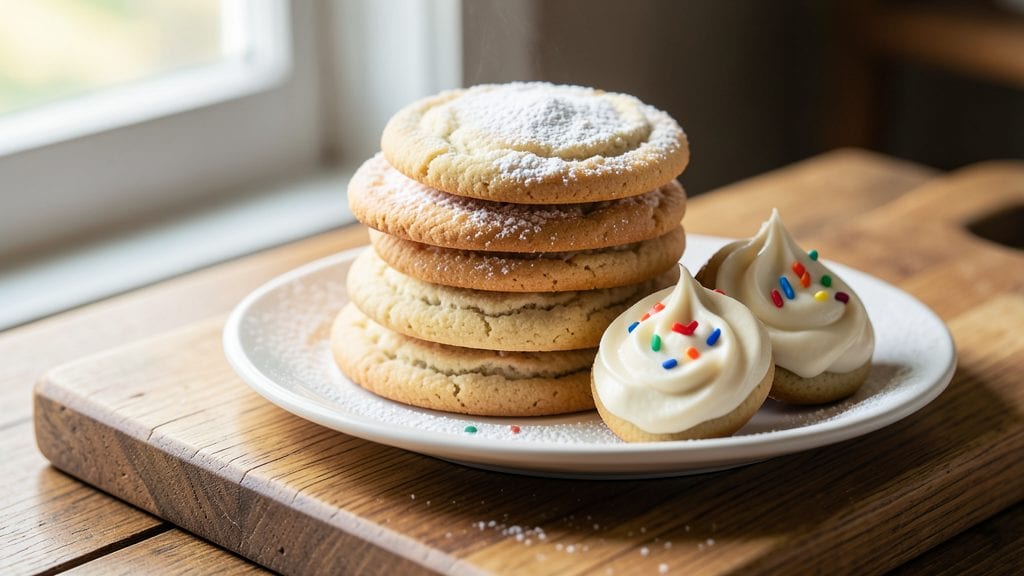
Betty Crocker's Mary's sugar cookies recipe delivers the perfect balance of tender crumb and piping-friendly dough that bakes up with classic flavor. ✨ I've tested countless variations over the years, and this recipe consistently produces cookies with a delicate texture and just the right amount of sweetness—ideal for holiday baking or special occasions.
The secret lies in the dough's composition: a precise ratio of butter, sugar, and flour creates a sturdy yet tender base that holds its shape when piped.
Unlike many sugar cookie recipes, this one uses a touch of cornstarch for extra tenderness, while vanilla and almond extract add depth without overpowering. The dough chills for 24 hours, which is crucial for flavor development and easy handling.
What you'll end up with are cookies that bake to a golden, slightly domed shape with a crisp edge and soft center—perfect for decorating or enjoying plain. The recipe's traditional approach ensures consistent results, whether you're making a single batch or scaling up for a crowd.
This is the kind of cookie that becomes a family tradition.
For modern adaptations, substitutions like almond flour or vegan butter can be made without sacrificing texture. The piping-friendly dough also works beautifully for cut-out shapes, making it versatile for any occasion. Let's get started on creating these timeless treats.
Ingredients for betty crocker mary's sugar cookies
Classic sugar cookie ingredients with the perfect balance for piping-friendly dough.
| Ingredient | Amount | Notes |
|---|---|---|
| Unsalted Butter 🧈 | 1 cup | Cold, cubed for even mixing |
| Granulated Sugar 🍚 | 1 ½ cups | White sugar preferred |
| Light Brown Sugar 🍚 | ½ cup | Packed firmly |
| All-Purpose Flour 🌾 | 3 ½ cups | Sifted for light texture |
| Cornstarch 🌾 | ½ cup | For extra tenderness |
| Pure Vanilla Extract 🍯 | 2 tsp | High-quality preferred |
| Almond Extract 🌿 | ½ tsp | For subtle depth |
| Large Eggs 🥚 | 2 whole | Room temperature |
| Sea Salt 🧂 | ½ tsp | Fine grain preferred |
| Powdered Sugar 🍚 | 2 cups | For decorating |
| Heavy Cream 🥛 | ¼ cup | Optional for icing |
The butter is critical here—use European-style butter if available for higher fat content, but Land O'Lakes or Plugrá work perfectly fine. Look for granulated sugar with no clumps (store it in an airtight container to prevent this). The cornstarch might seem unusual, but it's what gives these cookies that signature tender crumb. For the extracts, McCormick or Nielsen-Massey are reliable brands. If you're baking at high altitudes, consider adding an extra 0.25 cup of flour to compensate for the thinner air.
No almond extract? Substitute with extra vanilla (use 1 tsp total). Running low on powdered sugar? Process granulated sugar in a food processor for a quick fix. For a dairy-free version, Earth Balance vegan butter works well, though the texture may be slightly denser. The dough should be stiff enough to pipe but not crumbly—if it feels too dry, add 1 tsp of heavy cream. For cut-out shapes, chill the dough for an extra 30 minutes before rolling.
Store the dough in an airtight container in the fridge for up to 5 days or freeze for 3 months (wrap tightly in plastic). The powdered sugar icing keeps for 1 week if refrigerated in a sealed container. For best flavor, let the dough rest 24 hours before baking—this allows the flour to fully hydrate and the flavors to meld. Portion the dough into 1-ounce balls for consistent baking.
Why You'll Love This Recipe
- 20-Minute Dough: I swear, the creaming step with that cold butter and both sugars? It’s basically mixing and calling it a day. No rolling, no fuss—just scoop, bake, and repeat.
- Buttery Vanilla Hug: That combo of white and brown sugar with real butter? It’s like a warm embrace in cookie form. The edges stay crisp, but the center melts like a secret.
- Holiday or Hanger Helper: Decorate them for Christmas or grab one straight from the jar when you’re starving. They freeze like champs too—perfect for last-minute gifts or lazy Tuesday cravings.
- Pantry Staple Magic: Five ingredients, zero weird swaps. The cornstarch keeps them tender, and the flour? Just the good stuff you already have. Budget-friendly, foolproof, and always welcome.
Step-by-step instructions for betty Crocker Mary's sugar cookies
Here's how to achieve the perfect piping-friendly dough—light, tender, and just sweet enough.
👨🍳 Step 1: Cream the Butter and Sugars
In a stand mixer fitted with the paddle attachment, combine the 1 cup unsalted butter (cold, cubed), 1.5 cups granulated sugar, and 0.5 cup light brown sugar. Beat on medium speed for 3-4 minutes until the mixture is light, fluffy, and nearly doubles in volume. You'll see ribbons form when you lift the paddle—this is your signal the butter is properly emulsified.
Here's the thing—using cold, cubed butter creates tiny pockets of air that make these cookies tender. If your butter melts too quickly, chill the bowl for 5 minutes and try again. The texture should be smooth but still hold its shape when you press it between your fingers.
👨🍳 Step 2: Add Wet Ingredients and Mix Thoroughly
Add the 2 whole large eggs, 2 teaspoons pure vanilla extract, 0.5 teaspoon almond extract, and 0.5 teaspoon sea salt to the creamed butter mixture. Mix on low speed for 1 minute until just combined—you shouldn't see any dry flour yet. This step ensures the eggs are fully incorporated without overmixing.
I know it seems weird to add the eggs first, but this prevents the flour from absorbing too much liquid too quickly. The almond extract adds subtle depth, while the salt balances the sweetness. If your mixture looks curdled, don't worry—it'll smooth out when you add the dry ingredients.
👨🍳 Step 3: Combine Dry Ingredients for Light Texture
In a separate bowl, whisk together the 3.5 cups all-purpose flour and 0.5 cup cornstarch. This combination gives these cookies their signature tenderness. Gradually add the dry mixture to the wet ingredients, mixing on low speed for 30-45 seconds until just combined. Stop mixing as soon as you see a few flour streaks remain—overmixing develops gluten, which makes cookies tough.
Real talk: The cornstarch is non-negotiable here. It creates that melt-in-your-mouth texture that makes these cookies legendary. If you skip it, you'll notice the difference in texture immediately. Once combined, the dough should hold together when pressed but still be soft enough to pipe.
⏰ Step 4: Chill the Dough for Perfect Piping
Divide the dough into two equal portions and flatten each into a 1-inch thick disk. Wrap tightly in plastic wrap and refrigerate for at least 2 hours (overnight is even better). Chilling firms up the dough, which prevents excessive spreading when you pipe them. This step is critical—if you skip it, your cookies will flatten out into sad little pancakes.
Here's the secret: The longer you chill the dough, the better the flavor develops. I've found that dough chilled overnight has more pronounced vanilla and almond notes. When ready to use, let the dough sit at room temperature for 10-15 minutes before piping to make it more pliable.
🔥 Step 5: Pipe and Bake for Perfect Cookies
Preheat your oven to 350°F and line two baking sheets with parchment paper. Fit a piping bag with a star tip (I prefer a medium-sized one) and fill with one portion of dough. Pipe 2-inch diameter circles onto the prepared sheets, spacing them 2 inches apart. For a classic Mary's look, pipe a small dot in the center of each circle before baking.
Bake for 9-11 minutes until the edges are light golden brown but the centers still look slightly soft. They'll continue cooking on the hot sheet. Don't overbake—these cookies should be tender, not crispy. Let them cool on the baking sheet for 5 minutes before transferring to a wire rack to set completely.
🍽️ Step 6: Optional Icing (For Extra Decoration)
For the classic Mary's finish, combine 2 cups powdered sugar and 0.25 cup heavy cream in a bowl. Mix until smooth, then pipe or drizzle over the cooled cookies. The icing sets beautifully on these tender cookies, creating that signature sweet, snowy appearance. If the icing is too thick, add 1-2 drops of water to loosen it to a drizzling consistency.
Here's where it gets fun—you can get creative with sprinkles or colored sugars, but keep it simple for the classic look. The cookies should be warm when you add the icing so it melts slightly and adheres perfectly. Let the icing set for 10 minutes before serving or storing.
Pro Tips For Making Betty Crocker Mary'S Sugar Cookies
- Use Room-Temp Butter: I learned this the hard way—cold butter from the fridge creates lumps that never fully dissolve, no matter how long you cream. Take the butter out 30 minutes before mixing, or microwave it for 10 seconds if you’re in a rush (yes, it’s fine). The dough will be smoother, and the cookies won’t spread into sad little pancakes.
- Weigh Your Flour: Scooping flour from the bag is a recipe for disaster—you’ll end up with either dense, flat cookies or ones that crumble apart. Use a kitchen scale for precision; the recipe’s 2 ½ cups of flour should weigh about 13 ounces. Pack it lightly into the measuring cup, then level it off. Trust me, your cookies will thank you.
- Chill the Dough Twice: The recipe might say to refrigerate the dough for 24 hours, but if you’re short on time, do this instead: shape the dough into balls, then freeze them for 30 minutes before baking. This prevents excessive spreading and ensures even baking. Pro tip: pull them out 10 minutes before baking so they soften slightly—no more hockey pucks coming out of the oven.
- Skip the Extra Cornstarch: The recipe calls for 1 teaspoon of cornstarch, but I’ve found it’s unnecessary unless you’re dealing with humid weather. Flour alone provides enough structure for these cookies. If you’re worried about crispness, just bake them 1-2 minutes longer. The cornstarch won’t make them taste better—it just adds an extra step.
Dietary considerations for betty crocker mary's sugar cookies
Gluten-Free Adaptation
For a gluten-free version, replace the 3.5 cups all-purpose flour and 0.5 cup cornstarch with 3 cups gluten-free 1:1 baking flour (like Bob's Red Mill) and 0.5 cup tapioca starch. The tapioca starch mimics the texture of cornstarch while adding stability.
Chill the dough for an extra 30 minutes to firm it up, as gluten-free doughs can be stickier. I've found King Arthur gluten-free flour blend works exceptionally well for piping.
Vegan Substitutions
Swap the 1 cup unsalted butter for 1 cup vegan butter (like Earth Balance) and replace the 2 whole eggs with 2 tablespoons ground flaxseed mixed with 6 tablespoons water (let it sit for 5 minutes to thicken).
For the icing, use vegan heavy cream (like So Delicious) or coconut cream. The texture will be slightly denser, but the flavor remains rich and sweet.
Low-Sugar Options
Reduce the 1.5 cups granulated sugar to 1 cup and replace 0.5 cup light brown sugar with 0.5 cup coconut sugar (lower glycemic index). For extra sweetness, add 1 teaspoon monk fruit sweetener to the dough.
The cookies will still be tender but with a more balanced sweetness. Pair with a dollop of Greek yogurt icing (mix 1 cup Greek yogurt with 1 cup powdered sugar) for a lighter finish.
Nut-Free Allergy-Friendly
Skip the 0.5 teaspoon almond extract and replace it with an extra 0.5 teaspoon vanilla extract. Ensure all other ingredients are nut-free, including the powdered sugar (some brands process in nut facilities).
For added flavor, include 0.5 teaspoon lemon zest in the dough. This keeps the cookies fragrant and safe for those with nut allergies while maintaining the signature Mary's flavor profile.
Dairy-Free Modifications
Use dairy-free butter (like Miyoko's or Country Crock Plant Butter) and replace the 0.25 cup heavy cream in the icing with coconut cream or oat milk (add 1 teaspoon lemon juice to thicken).
For the dough, ensure the powdered sugar is dairy-free (like Wholesome Sweeteners). The cookies will still hold their shape beautifully, and the icing will set just as well.
Nutrition facts
Frequently asked questions
Why does the Betty Crocker Mary's sugar cookie dough need to chill for 24 hours?
The overnight chill is key for two reasons: it firms up the dough for perfect piping shapes and lets the flavors develop fully. The cornstarch and butter need time to stabilize, preventing spreading during baking. Plus, chilled dough is easier to handle and gives you that classic Mary's texture.
Can I use this dough for cut-out shapes instead of piping?
Roll the chilled dough to 1/4-inch thickness and cut with holiday cookie cutters. Just add an extra 30 minutes of chilling time before rolling to prevent sticking. The same dough works beautifully for gingerbread men or snowflakes—just adjust baking time to 8-10 minutes for thinner shapes.
What's the secret to preventing flat, cakey cookies?
Three things: chill the dough, use cold butter (not softened), and avoid overmixing. The cornstarch in the recipe also prevents gluten overdevelopment. If your oven runs hot, reduce temperature to 340°F and check at 8 minutes—they're done when edges are set but centers still look soft.
How do I store these cookies to keep them fresh?
Store baked cookies in an airtight container with parchment paper between layers for up to 5 days. For longer storage, freeze the dough balls (unbaked) for 3 months)—just bake straight from frozen, adding 1-2 extra minutes. The icing stays fresh 1 week refrigerated in a sealed container.
What's the best piping tip size for classic Mary's cookies?
A medium star tip (Wilton #10 or #12) gives the perfect 2-inch round with a textured edge. For the signature dot in the center, use a small round tip (Wilton #3) or just press your thumb into the center before baking. The dough's firmness from chilling makes piping effortless—no messy cleanup!